I Blew $12,400 on VR Headsets and Learned the Hard Way: What Nobody Tells You About In-Ear Audio and Hearing Safety
"The demo went great—so I ordered 60 units."
In March 2024, I was three months into my role as procurement coordinator for a mid-sized logistics company when our HR director approached me about a "wellness initiative." She'd read somewhere that VR fitness could reduce sedentary time, and she wanted to pilot it for our warehouse supervisors.
I had been handling VR equipment orders for about two years at that point—nothing massive, mostly single-unit requests for our training department. But this was different. Sixty employees. A real budget. My first chance to prove I could run a proper rollout.
I said yes before she finished the sentence. That was mistake number one.
The research phase (or what I thought was research)
Here's the thing about buying VR headsets for a workforce: there's no single "best" option. I spent two weeks comparing Meta Quest 2, Quest 3, and Quest 3S units for our scenario. The Quest 3 offered color passthrough and better performance. The Quest 2 was cheaper. The 3S sat somewhere in between.
I went back and forth between the Quest 3 and the Quest 2 for our fitness pilot. The 3 had better graphics and could handle Xbox Cloud Gaming, which I thought might be a nice bonus for break rooms. But the 2 cost about 40% less per unit, and with 60 headsets to buy, that difference was roughly $6,000.
On paper, the Quest 2 made sense. But my gut said nobody would be excited about yesterday's hardware.
I ordered 60 Quest 3 units in May 2024. Total cost with business shipping and a three-year protection plan: $28,900.
The audio problem nobody mentioned
We launched the pilot in June. Within three weeks, I started getting emails I didn't expect.
"The audio cuts out sometimes."
"Can we use our own headphones?"
"I feel like my ears are ringing after sessions."
That last one stopped me cold. I hadn't even thought about audio. The Quest 3 has built-in speakers, but most of our employees were pairing their personal wireless headphones—the over-ear kind that sit on top of the VR straps—for better immersion. Some were using in-ear buds.
Here's what I didn't know: extended VR sessions with headphones at high volume can create the same hearing damage risk as loud music or machinery. The immersive nature of VR makes it easy to lose track of volume levels, especially when you're swinging virtual swords or running on a virtual treadmill and the game audio is competing with the physical effort.
From the outside, it looked like we just needed better audio gear. The reality was that I had no idea what a safe listening protocol for VR looked like—or whether any of our employees were already at risk.
The $12,400 mistake
Our first batch of 15 "audio kits" consisted of mid-range wireless headphones with a built-in microphone. I ordered them in July after a quick search for "best headphones for VR." The product description said "crystal clear audio" and "all-day comfort."
What it didn't say: the particular model we bought had a known latency issue that made it unusable for rhythm-based fitness apps. The audio lagged about 180 milliseconds behind the video. For most games, that's fine. For Beat Saber, our most popular fitness title, it was a disaster. Employees couldn't hit the beats, the scoring broke, and the sessions felt broken.
We returned 42 of the 60 headsets. (Surprise, surprise.)
Between restocking fees, return shipping, and the time our IT team spent diagnosing the problem, that little audio experiment cost us $12,400 and a month of momentum. Not to mention the 60 pairs of wireless headphones I ordered before checking whether they were even compatible with the Quest 3's Bluetooth profile.
That error taught me something I should have learned from my first VR purchase three years earlier: specs on a product page don't tell you what happens after two hours of continuous use.
What I actually learned about headphones and hearing safety
After the return fiasco, I brought in an occupational health consultant. The conversation changed how I think about every audio product we recommend.
"Are headphones bad for your ears?" she asked me, repeating my question with a raised eyebrow. "The answer is: it depends on volume and duration. Always. There is no magic headphone that's safe at high volume for hours."
She pointed me to FTC guidelines on advertising claims—specifically the requirement that health-related claims be substantiated with evidence. The short version: a product labeled "safe for hearing" means nothing unless there's data behind it.
Here's what we now require before any VR audio rolls out:
- Volume caps: Every headset is locked to 85 dB maximum output (the same standard used in industrial workplace safety)
- Duration limits: No continuous VR sessions longer than 60 minutes without a 10-minute break
- Personal headphones policy: Employees can use their own wireless over-ear headphones, but only if they pass a compatibility check—no random Bluetooth pairing
- Audio level training: Every supervisor trained to recognize signs of audio-induced fatigue and hearing strain
That "compatibility check" is just a one-page form now. I have a laminated copy taped inside the equipment cabinet.
The honest limitation (and what I'd tell a friend)
VR fitness works for some workplaces. It worked for our employees who had private office spaces and flexible break schedules. It flat-out didn't work for our warehouse floor staff who only had 20-minute breaks and shared equipment.
If you're considering VR for a similar initiative, here's my honest take: this solution works well for 80% of desk-based wellness programs. But if your team is already on their feet all day, adding a standing VR session isn't a perk—it's an extra shift.
I'm not going to pretend I have this all figured out. I still get nervous every time I place an order for new audio gear. But I now have a checklist that's caught 14 potential errors in the past 10 months—everything from Bluetooth incompatibility to headset weight limits for smaller frames.
The checklist doesn't make me feel smart. It makes me feel cautious. And honestly? At $12,400 per lesson, cautious is exactly what I need to be.
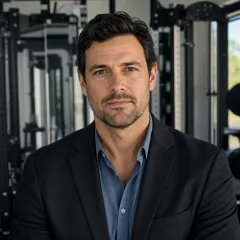
Marcus Feldman
Marcus Feldman is a commercial strength-equipment analyst covering selectorized machines, plate-loaded stations, Smith machines, functional trainers, power racks, benches, barbells, dumbbells, and cable systems. He applies ISO 20957-1 and ISO 20957-2 while comparing rated loads, stability, frame deflection, pulley ratios, cable travel, adjustment increments, guarding, entrapment points, fastener retention, and fatigue cycles. His guides help gym operators, coaches, facility planners, and procurement teams evaluate biomechanics, user capacity, floor layout, maintenance access, durability, and lifecycle value.