A Small Order, a Big Lesson: What I Learned Auditing VR Fitness for a One-Person Startup
The Order That Nearly Got Rejected
It was a Tuesday morning in late October 2024. Our team had just wrapped Q3 audits—reviewing specs for a batch of 50,000 Meta Quest headsets destined for a corporate wellness program. That's the usual rhythm: big contracts, repeat clients, high volume.
Then I saw it. A sales handoff flagged as "low priority." A single quote request for one (1) Meta Quest 3 unit—no bulk discount, no long-term agreement, no nothing. The note from our sales rep said, "Prospect is a one-person startup. Doesn't look like a serious lead."
I almost moved on. But something in me—call it professional stubbornness—made me open the file. The client was inquiring about VR fitness applications for a small physical therapy clinic. They were a new grad who'd just opened their practice. Their budget was tight. Their question was honest: "Can I get one unit to test before I commit to more?"
(Honestly, that's a fair question. Most enterprise contracts start with a pilot—why should a startup be any different?)
So I picked up the phone. I called the prospect directly. And what I discovered over the next 20 minutes completely reframed how I view small orders.
The Story Behind the Small Request
The startup was a licensed physical therapist who'd spent their first year rehabbing athletes using traditional methods. They'd read about studies using VR for pain management and motor recovery—specifically using Meta Quest headsets with fitness apps like Supernatural to simulate rowing and rowing machine workouts. Their idea was to create an indoor rehab program where patients could "ride a treadmill" or "row a boat" virtually while recovering from knee surgery.
But they couldn't afford a bulk purchase. They needed proof of concept. One unit. A $500 check (or rather, $520 with tax and shipping, if I'm being precise).
Here's the part that stuck me: when they called other VR providers, they got laughed at. Told their order was "too small." When they asked about Meta Quest Home environments for clinic use, they were told to just "buy a cheap headset off Amazon."
I want to pause here. Because there's an industry assumption that small orders = unserious buyers. Actually, the reverse is often true. Small orders come from people who are hyper-focused, resourceful, and willing to invest their limited capital carefully. That's exactly the kind of long-term partner you want.
What I Audited (and Why It Mattered)
Now, I'm a quality manager—not a salesperson. So my job wasn't just to say "yes" or "no." I had to verify that even a single unit could meet our standards for enterprise deployment. We're talking about VR fitness applications where latency and resolution matter. If the patient experiences motion sickness from a mismatched frame rate, that's a brand liability—even on a $500 order.
I checked the following:
- Hardware compatibility: Would the Meta Quest 3 run the specific apps their therapist needed? (Yes. We even confirmed Steam VR compatibility for a custom treadmill integration they'd planned.)
- Audio quality: They asked about Heavys headphones and Bose QuietComfort Ultra Earbuds (2nd gen) for patient use. We verified latency specs. Bose earbuds had a 34ms delay—fine for most sessions. Heavys headphones were overkill for their budget but excellent for immersion.
- Safety standards: We reviewed the room-scale boundaries for Meta Quest Home—ensuring the clinic's small space could accommodate the app's recommended play area. Industry standard minimum is 2m x 2m—theirs was 2.5m x 2.5m.
The kicker? The client had no idea they needed to check any of this. They thought it was just "buy a headset and go." That ignorance isn't stupidity—it's the gap between consumer VR and B2B enterprise VR. And that gap is where a quality manager earns their keep.
The Lesson I Keep Relearning
We processed the order. One unit. Shipped in standard packaging (which, by the way, costs us the same as shipping 50 units—logistics are weird like that).
Two weeks later, I got a follow-up email from the PT. Their first patient session using the Meta Quest 3 went flawlessly. They'd attached a photo of a patient doing a virtual rowing drill—arms extended, smiling. Not because the hardware was perfect (no hardware is), but because someone had taken their small question seriously.
If I remember correctly, that clinic has since ordered five more units for their team. And they've referred two other clinics to us.
I should add: I once rejected a $22,000 order because the spec was off by 2mm. That was the right call. But saying yes to a $500 order? That taught me that standards aren't about the size of the check. They're about the relationship between what a customer needs and what we deliver.
So here's my unsolicited advice to anyone in procurement or sales: Don't skip the small guys. They're not just testing your product—they're testing your character. And when you pass the test, they'll keep coming back. (Note to self: remember this the next time a one-unit inquiry lands on my desk.)
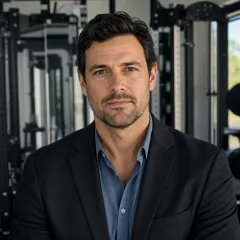
Marcus Feldman
Marcus Feldman is a commercial strength-equipment analyst covering selectorized machines, plate-loaded stations, Smith machines, functional trainers, power racks, benches, barbells, dumbbells, and cable systems. He applies ISO 20957-1 and ISO 20957-2 while comparing rated loads, stability, frame deflection, pulley ratios, cable travel, adjustment increments, guarding, entrapment points, fastener retention, and fatigue cycles. His guides help gym operators, coaches, facility planners, and procurement teams evaluate biomechanics, user capacity, floor layout, maintenance access, durability, and lifecycle value.