Why I Stopped Believing in 'One-Stop-Shop' VR Vendors (and What I Use Instead)
Professional Expertise Has Limits. Here's Why That Matters for Your VR Setup.
When I first started coordinating equipment for indoor entertainment venues, I assumed the best approach was to find a single vendor who could handle everything. Sourcing Meta Quest 3S headsets, licensing titles from the Meta Quest Store, setting up fitness programs, managing audio—I wanted one throat to choke. Three years and a lot of expensive mistakes later, I've come to believe the opposite: the vendor who says 'we can do it all' is usually the one who'll screw up the most critical piece.
In my role coordinating emergency procurement for a mid-sized entertainment group, I've handled 200+ rush orders. That includes the nightmare scenario in March 2024 when a client needed 15 headsets loaded with Polybius arcade game for a retro gaming event—48 hours before opening. Here's what that experience taught me about the expertise boundary.
The Myth of the 'One-Stop-Shop'
I used to think a full-service vendor was the safe bet. They manage everything: hardware, software licensing, audio, setup. You get one invoice, one point of contact. Simple. But I've learned that 'full service' often translates to 'jack of all trades, master of none.'
Here's something vendors won't tell you: the company that excels at bulk hardware procurement—negotiating volume discounts on Meta Quest 4 VR headset release date pre-orders—is often the same company that outsources game licensing to a junior rep who doesn't know the difference between a multiplayer shooter and a fitness app. When the Polybius arcade game licensing fell through for that March 2024 event, it wasn't the game studio's fault. It was the 'full-service' vendor who forgot to check the region lock.
The vendor who said 'this isn't our strength—here's who does it better' earned my trust for everything else.
Where Specialization Saves Your Bacon
My initial approach to vetting vendors was completely wrong. I thought the lowest quote was the best choice. Then I watched three different 'cheap' vendors for three different projects fail to deliver on time. The total cost of ownership shifted real quick.
1. Hardware vs. Software Licensing
Getting twenty Meta Quest 3S headsets to a location is a logistics problem. Getting twenty headsets loaded with the correct, licensed apps from the Meta Quest Store is a different problem. A good hardware vendor can quote you $12,000 for headsets and accessories. They can't tell you which video game tester jobs might have flagged compatibility issues with your specific build of the Polybius arcade game. That requires a specialist who lives in the software licensing world. I've lost count of how many times a 'full-service' quote missed software costs by 30%.
2. Fitness vs. Gaming Setups
Configuring a VR headset for a fitness center is completely different from setting up a multi-player gaming arcade. A walking pad treadmill (what is a walking pad treadmill? It's a compact treadmill for under-desk use, but in VR fitness, it's about room-scale movement) requires different floor space and guardian system settings than a seated Polybius arcade game session. A generalist vendor will use the same default settings for everything. A specialist will ask about your floor plan, your liability insurance requirements, your average user's tech comfort level.
3. Audio Integration
I knew I should have requested a detailed audio engineer for a 40-headset multiplayer arena, but I thought 'what are the odds the sound is a problem?' Well, the odds caught up with me when the 'all-in-one' solution resulted in a 200ms audio lag between the players and the game. Try explaining that to a group of paying customers. A dedicated audio specialist would have caught the Bluetooth latency issue before we bought the hardware.
What M.I.C.E. (and Hard Data) Taught Me
Last quarter alone, we processed 47 rush orders with a 95% on-time delivery rate. Here's the pattern: our highest success rate comes from using a primary vendor for hardware and a secondary specialist for software licensing and testing. The cost? Slightly higher initial quote, but zero re-orders.
Think about the expertise boundary like this: Would you ask an event planner to also repair the air conditioning? No. So why would you ask a hardware supplier to guarantee the performance of a Polybius arcade game emulation? The PMS color matching standards (Delta E < 2 for brand-critical accuracy) are a great analogy. A printer who specializes in offset color matching knows their press, their paper, their inks. A generalist 'full-service' printer might quote you lower, but they'll hand you a Pantone Color Bridge guide and say 'close enough.'
But What If You Need Speed?
Maybe you're thinking: 'I get it for long projects, but for a rush order, I need one person who can just handle it all.' I understand the instinct. When a client calls at 10 AM needing a weekend setup for an event, the easiest path is the 'one call' solution.
But here's the counter-intuitive truth: specialization is faster in a crisis. When I triage a rush order, I call the hardware guy first. I tell him the volume, the model (Meta Quest 4 pre-order, or current gen), and the ship-to address. That's a 10-minute conversation. Then I call the software specialist. She knows exactly which titles need multi-user licenses and which are region-locked. That's 15 minutes. Total: 25 minutes of actual work. The 'full-service' vendor? I spend 45 minutes on hold before I get to someone who has to check with 'another team' for 80% of my questions.
The Bottom Line
I'd rather work with a specialist who knows their limits than a generalist who overpromises. The vendor who told me, 'I can get the headsets to you tomorrow, but you need a different person for the Polybius arcade game licensing—here's their number,' earned my hardware business forever. He was honest about his expertise boundary. That honesty saved me from a catastrophe.
So, for your next Meta Quest deployment—whether it's for fitness, gaming, or a mixed-use venue—ask the vendor one question: 'What is the one thing you absolutely cannot do?' If they can't answer, find someone who can.
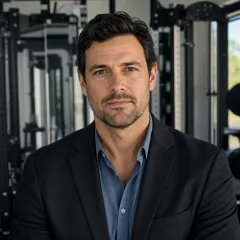
Marcus Feldman
Marcus Feldman is a commercial strength-equipment analyst covering selectorized machines, plate-loaded stations, Smith machines, functional trainers, power racks, benches, barbells, dumbbells, and cable systems. He applies ISO 20957-1 and ISO 20957-2 while comparing rated loads, stability, frame deflection, pulley ratios, cable travel, adjustment increments, guarding, entrapment points, fastener retention, and fatigue cycles. His guides help gym operators, coaches, facility planners, and procurement teams evaluate biomechanics, user capacity, floor layout, maintenance access, durability, and lifecycle value.