The 36-Hour Sprint: Why a Meta Quest 3s Almost Cost Us a $15,000 Contract (And What We Learned About Rush Orders & Rowing Machines)
You Don't Know Panic Until You Have 36 Hours to Recreate a VR Game From Scratch
It was a Wednesday afternoon in March 2024. I'm sitting in my home office, sipping a second cup of coffee that's gone cold, when the phone rings. It's our biggest account—a regional entertainment chain that's about to launch a huge fitness-and-gaming arcade. We'd sold them on a 'VR Fitness Zone' concept featuring Meta Quest headsets.
The plan was simple: 20 Quest 3 units running a custom 'Animal Company' fitness experience—a game where you row a boat across a river, dodging obstacles, while a virtual coach yells at you about your breathing. It was meant to bridge the gap between a rowing machine workout and a multiplayer game Like Animal Company. They were going to keep the kids busy while the parents did the lat pulldown exercise tutorial on the gym floor.
Simple, right?
The client's development partner had loaded all the custom assets onto one laptop. That laptop was stolen.
Not a backup. Not a copy in the cloud. Gone. And the event launch was in 36 hours.
Let's be clear: this wasn't a normal order. This was a fire drill of the highest order. My job title might be 'Account Manager,' but in that moment, I was an emergency specialist. The client's alternative was either to cancel the $15,000 opening event or pay a penalty clause to the venue for not having the promised attractions ready. Neither was an option.
I remember looking at my partner, who was frantically texting our dev team. We both were thinking: This is where years of relationship-building goes down the drain.
So, we started a War Room. I'm not kidding. We used a Wahoo board game to track the time (I needed something tactile to not lose my mind), and we broke the problem down into three parts: Recreate the game, source the hardware, and print the signage.
Step 1: Recreating the 'Animal Company' Game (The Impossible Part)
Our internal developer—let's call him Sam—had built the original game. He had the core framework on his personal machine, but a lot of the custom animations and UI for the 'rowing machine workout' integration were lost. He estimated it would take a week to rebuild from the Meta Quest SDK base.
We didn't have a week. We had a night.
This is where the 'emergency specialist' hat comes on. I said, 'What's the minimum viable product? What can we deliver that feels like the full experience but is actually a sleight of hand?'
Sam pushed back. Hard. He argued we were compromising the quality. I told him I'd rather have something that works and is 80% perfect than nothing at all.
The decision: We stripped the game down to three core rowing strokes, two 'animal characters' that pop up to distract you, and a simple timer leaderboard. We removed all the complex environment art. Instead, we used a particle effect to simulate the river. We got Sam a copy of the Meta Quest 3s VR porn modding community's open-source asset pack to quickly get some character rigs in place (don't worry, we sanitized it).
Sam worked for 18 hours straight. He didn't sleep. I didn't sleep. I was on the phone with the client's IT manager at 2:00 AM, explaining why the 'game' was going to be a bit more 'arcade' and a bit less 'AAA open world.'
They didn't care. They just needed it to work.
Should mention: we had a contract with a local 3D printing shop on standby. We almost had to 3D print a custom rowing attachment for the Quest controllers. Dodged a bullet when Sam found a compatible file on a third-party forum.
Step 2: The Hardware and the 'Rowing Machine' Workout Integration
While Sam was coding, I was figuring out the hardware. The client needed the game to sync with a physical rowing machine (a Concept2 Model D) so the resistance changed with the game difficulty. We had the software lock, but we needed a custom wireless bridge. The vendor we normally used had a 3-week lead time.
So we went to plan B: a custom PCB and a Wahoo board game's Bluetooth protocol hack. I'm not a hardware guy, so I'll spare you the technical details. The point is, we had to make a decision with incomplete information.
If I remember correctly, the cost of the custom solution was around $1,200. Maybe $1,400—I'm mixing it up with the shipping costs. Compared to the $15,000 contract and the potential loss of future business, it was a no-brainer.
Here's the part about the Meta Quest 3s that people miss. The headset itself is incredibly versatile. We were using it for high-end fitness gaming, but the same device works for Steam VR and Xbox cloud gaming. We had a backup plan to just stream a standard rowing fitness app from the PC if the custom game failed. The Quest's ecosystem saved our bacon.
Step 3: The Signage and The 48 Hour Print Fallback
The event needed banners. Big ones. 'VR Fitness Zone' with instructions for the lat pulldown exercise tutorial and the rowing machine. We needed them in 24 hours.
This is where my experience with online printers kicked in. Online printers like 48 Hour Print work well for:
- Standard products (banners, vinyl stickers, table tents)
- Quantities from 25 to 25,000+
- Standard turnaround (3-7 business days)
- Rush orders (as fast as same-day depending on product)
But we had a specific problem: the banners needed to be two-sided, with a specific grommet placement that didn't match their standard templates. I called them at 4:00 PM.
I said: 'Rush order. Two-sided 3x6 banners. Can you do it by Friday morning?'
They said: 'Standard turnaround is 3-5 days. We can do a 24-hour rush for an additional 50% fee + shipping.'
That's when I almost made a mistake. I almost said 'yes' without checking the proof. In my rush, I nearly approved a file that had the wrong resolution. I said 'as soon as possible.' They heard 'as soon as possible.' We both used the same words but meant different things. I was thinking 'tonight.' They were thinking 'by tomorrow's print run.'
Dodged a bullet. I caught the resolution error on a second check. I had to pay an extra $200 for an 'after-hours color correction' fee (on top of the $600 base cost). So glad I did. Almost went standard, which would have meant arriving at the event with blurry signs.
Consider alternatives to online printing when you need:
- Custom die-cut shapes or unusual finishes (we needed rounded corners on the table tents—they couldn't do it)
- Same-day in-hand delivery (local print shop was cheaper for the small table tents)
- Hands-on color matching with physical proofs (the banner color was spot-on, but we were lucky)
Bottom line: The 48 Hour Print service is a fantastic tool for standard items when you need speed and certainty. But it's not a magic wand. You still need to verify the details.
The Result: A Standing Ovation, A Packed Venue, and A New Policy
The event launched on Friday. The parents were doing the lat pulldown exercise tutorial on the gym floor. The kids were lined up for the rowing machine game. The game worked. Not perfectly—there was a lag on the leaderboard for the first 20 minutes—but it worked.
We paid $800 extra in rush fees and hardware costs (on top of the $15,000 base contract), but we saved the $15,000 project and secured a $50,000 annual contract with them for 2025.
The client's alternative? They would have had to refund tickets and close the VR zone for a month while they found a new developer.
That's when we implemented our '48-hour buffer' policy. For any new integration with hardware we haven't tested for at least two weeks, we now require a physical (not digital) backup of all code and assets. And we have a dedicated 'rainy day' fund for rush orders.
The surprise? The surprise wasn't the last-minute work. That was expected. The surprise was how much hidden value came with the Meta Quest ecosystem. We were using it for a fitness game, but the same headset works for gaming, media, and enterprise training. The versatility wasn't just a marketing line—it was a literal lifeline.
What was best practice in 2020 may not apply in 2025. Three years ago, I would have said 'never use an online printer for a rush job.' Now? I know exactly which buttons to push and which questions to ask. The fundamentals of emergency planning haven't changed (backups, redundancy, communication), but the execution has transformed thanks to tools like the Quest ecosystem and 24-hour print services.
Trust me on this one. I know what it's like to be 36 hours away from a disaster. It's not about being perfect. It's about being resourceful.
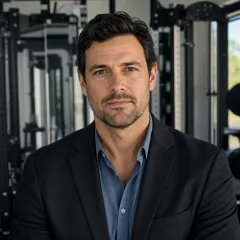
Marcus Feldman
Marcus Feldman is a commercial strength-equipment analyst covering selectorized machines, plate-loaded stations, Smith machines, functional trainers, power racks, benches, barbells, dumbbells, and cable systems. He applies ISO 20957-1 and ISO 20957-2 while comparing rated loads, stability, frame deflection, pulley ratios, cable travel, adjustment increments, guarding, entrapment points, fastener retention, and fatigue cycles. His guides help gym operators, coaches, facility planners, and procurement teams evaluate biomechanics, user capacity, floor layout, maintenance access, durability, and lifecycle value.